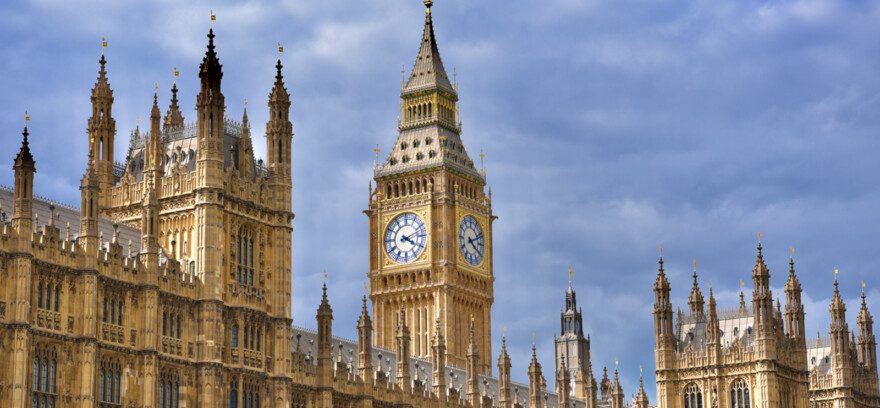
UK markets advanced this week, with the FTSE 100 Index rising by 1.8% to trade at 8,970 points at the time of writing.
The UK is facing “daunting” risks to the public finances as its soaring debt load leads to “substantial erosion” of its capacity to respond to future shocks, the Office for Budget Responsibility said on Tuesday. Underlying public debt is at its highest level since the early 1960’s and set to rise further, and addressing the issue has become “considerably more challenging” given low economic growth and rising interest rates, the Office for Budget Responsibility added. “Against this more challenging domestic and global backdrop, the scale and array of risks to the UK fiscal outlook remains daunting”, the watchdog said in its fiscal risks and sustainability report.
The report comes as Chancellor Rachel Reeves faced renewed pressure to raise taxes in the autumn Budget given signs of a further deterioration in the health of the public finances. U-turns on welfare reforms coupled with strains on the UK economy and the threat of productivity downgrades from the Office for Budget Responsibility could force tax rises or spending cuts exceeding £20 billion in the autumn, economists say.
The Office for Budget Responsibility noted that the UK now has the sixth-highest debt, fifth-highest deficit and third-highest borrowing costs among 36 advanced economies. Unlike many other big economies, the UK has not pared back public debt after it was increased during the Covid-19 pandemic and energy crisis, leaving the country’s situation increasingly vulnerable by international standards. The watchdog noted that borrowing costs have risen further as long-term gilt yields are now higher in the UK than at any time since the start of the century.
Sir Keir Starmer has refused to rule out prolonging a freeze on income tax thresholds for the rest of the current parliament. Starmer said that he stood by the Labour party’s manifesto commitment not to raise income tax, national insurance or VAT on working people. However, he refused to clarify whether extending the freeze on tax bands was under consideration. Extending the freeze on tax bands beyond April 2028 would raise £9-£10 billion through fiscal drag by the end of the parliament, according to the Institute for Fiscal Studies think-tank.
Elsewhere, the Bank of England’s latest financial stability report suggested that most British companies would withstand sharply higher tariffs, even if their earnings fell 10% and their borrowing costs surged.
Finally, news on Friday showed that the British Economy contracted 0.1% month on month in May following a 0.3% fall in April and compared to a 0.1% expansion. These consecutive drops in growth put the economy at risk of an overall contraction in quarter two.
Commodity markets
In the commodity markets, Brent crude futures traded around $69 per barrel on Friday and are set to end the week up slightly by 1.5%. Traders are looking to Donald Trump’s announcement on Russia as the President may announce new sanctions on major oil producer which has raised concerns about future supply.
Furthermore, Houthi attacks in the Red Sea sank two cargo vessels, adding to concerns over supply. This news appeared to dwarf developments earlier in the week, which stated that Saudi Arabia was set to ship 51 Million barrels of crude oil to China in August, the largest volume in over two years.
Gold prices traded around $3,330 an ounce on Friday, gaining for the third session in a row and up on the week around 1.2%. Safe-haven demand is on the rise as President Trump announces fresh tariffs, notably 35% on Canadian imports starting 1st August and blanket tariffs of 15-20% on most other trade partners. This followed threats made earlier in the week on Brazil and proposed duties on copper, semiconductors and pharmaceuticals.
Equity markets
US equity futures were broadly lower on Friday despite a strong session from Wall Street on Thursday, where both the S&P500 and Nasdaq Composite closed at fresh highs. In Thursday’s regular trading session, the Dow Jones Industrial Average gained 0.43%, the S&P 500 rose 0.27%, whilst the Nasdaq Composite advanced 0.09% as investors largely brushed off the latest tariff escalations.
Donald Trump revived his threat to hit major trading partners with steep “reciprocal” tariffs even as he granted a three-week reprieve for countries to negotiate trade deals with the US.
The President sent letters to Japan and South Korea, both among the US’s biggest trading counterparts, saying the country would impose 25% levies beginning on August 1st. South Africa would be hit with 30% tariffs, Trump said, while also announcing big levies on 11 other countries.
The tariffs were roughly on a par with those Trump unveiled during his “liberation day” announcement on April 2nd, which prompted severe disruptions across global financial markets. The reciprocal levies, which affected dozens of countries, were paused until July 9th, steadying markets. However, since then the White house has struck just three trade pacts, with the UK, China and Vietnam. Trump said that his letters were “more or less the final offer”, however he added that “if countries call with a different offer, and if I like it, we’ll do it”.
EU negotiators are closing in on a trade deal with Trump, that would see higher tariffs than those granted to the UK, a Brexit dividend that has rattled some European capitals. Brussels is ready to sign a temporary framework that sets the US President’s “reciprocal” tariffs at 10% while talks continue, matching the baseline duty imposed on the UK. However, the EU is not expecting to achieve the same access to the US market as British steel, cars and other products subject to sectoral duties. Trump, who championed the UK’s 2016 decision to leave the EU, is also demanding 17% tariffs on EU agrifood products.
US copper prices soared to record highs after Trump said Washington would impose 50% tariffs on the metal in the latest escalation of the President’s trade war. Trump also threatened to impose a 200% tariff on pharmaceuticals, which investors shrugged off, betting that the levy is unlikely to be implemented.
The information provided in this communication is not advice or a personal recommendation, and you should not make any investment decisions on the basis of it. If you are unsure of whether an investment is right for you, please seek advice. If you choose to invest, your capital may be at risk and the value of an investment may fall as well as rise in value, so you could get back less than you originally invested.